
I Had Cancer Growing in Me for 10 Years and Had Zero Symptoms. Here's What I Wish I'd Known.
Apr 15, 2026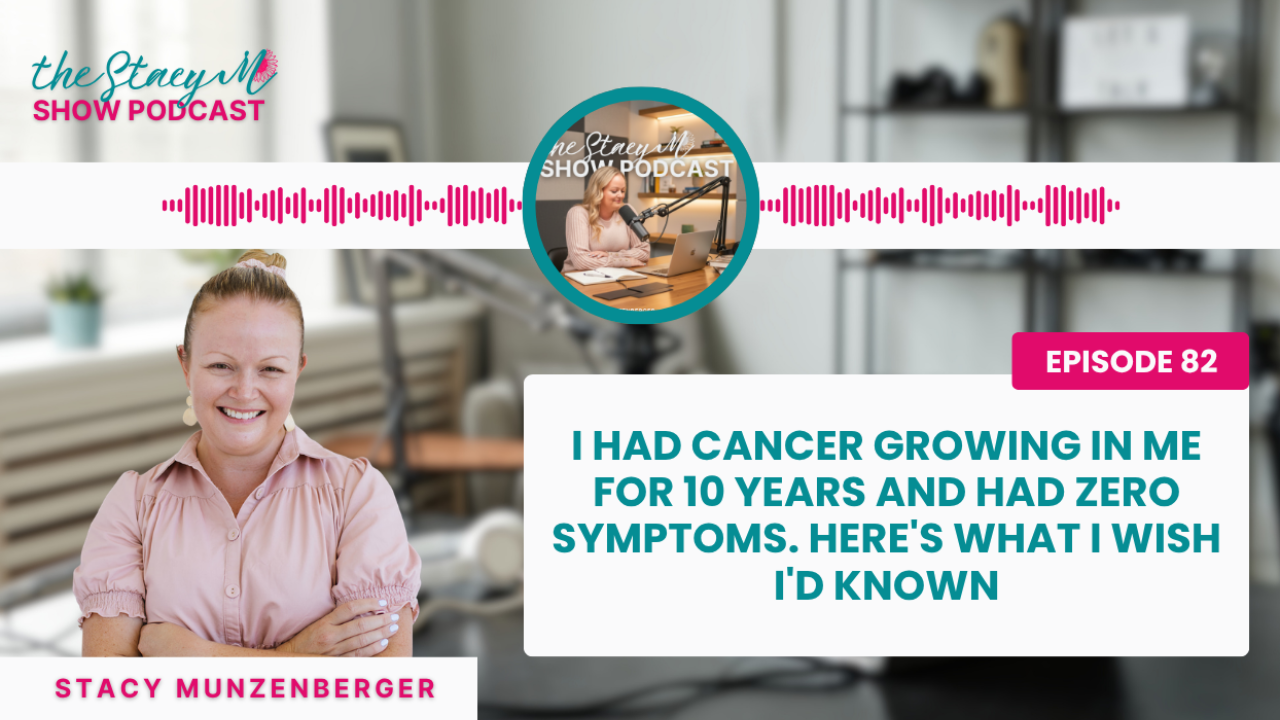
Picture this.
You're busy. You're juggling work, kids, appointments for everyone else, and somewhere between the school run and the third cup of coffee you've told yourself you'd get around to booking that health check.
Next week. Next month. When things calm down.
Sound familiar?
That was me. For fourteen years.
And I'm not telling you this to scare you. I'm telling you this because I sat in a motel room, exhausted, anaemic, still processing months of radiation, chemotherapy, brachytherapy and immunotherapy — and I thought: if sharing this gets even one person to book their overdue pap smear, it's worth every uncomfortable minute of this conversation.
So let's have it. No filter. No glam. Just the truth.
The Symptom I Almost Wrote Off
Here's the thing about Stage 3 cervical cancer — it didn't announce itself dramatically. There was no alarm. No obvious sign that something serious was happening.
The only symptom I had was discharge.
Just discharge.
I genuinely thought my bladder was playing up. It wasn't the usual kind — it wasn't urine, it wasn't smelly — but something was off. I waited a couple of weeks thinking it might be a UTI. I tried online doctors. They told me I had diabetes. (I don't have diabetes. I checked my own blood sugar levels. Multiple times. I was very sure.)
Eventually, I went to a physical doctor. Got a pap smear done. And that's when everything changed.
The doctor — who I have a very honest relationship with — told me it wasn't looking right. It was red, inflamed, bleeding. During the smear itself I felt incredibly unwell. Nauseous. In pain. And I sat in my car afterwards genuinely wondering if I was going to vomit.
That was a Saturday morning.
By Thursday, mid-trip to Sydney for a work event, I got the call that the doctor needed to see me urgently.
I heard the words ovarian cancer on the phone — which didn't quite make sense — but my brain was already overwhelmed. It was cervical cancer. Stage one at first. Then stage two. Then, after more scans and tests, stage three.
It hadn't suddenly grown that fast. The tests were just becoming more precise. And the picture was becoming clearer.
14 Years Between Pap Smears. No Valid Excuse.
I want to be really honest about this part, because it's the part that matters most.
I have no valid reason for not getting a pap smear for fourteen years.
Not one.
I was busy — but so is everyone. I didn't love the discomfort — but who does? I just... kept putting it off. And off. And off.
The thing is, cervical cancer — particularly squamous cell — is slow growing. My medical team believes it had likely been developing in my body for around ten years. Ten years. And I had zero symptoms until the last quarter of last year.
It could have been caught at stage one. It probably would have been caught before it was even a stage, just some cells that needed monitoring. But because I wasn't getting checked, it had the space and the time to grow quietly without interruption.
Five to ten minutes of discomfort at a pap smear.
Versus months of daily radiation, five rounds of chemotherapy, brachytherapy, and two years of immunotherapy.
I know which one I'd choose now.
What Treatment Actually Looks Like (No One Tells You This Part)
Nobody really prepares you for what cancer treatment feels like from the inside. So let me tell you — in plain language, the way I wish someone had told me.
External radiation happened five days a week for five weeks. Because my treatment started the week of Christmas, some days were doubled to make up for public holidays. I was at the hospital every single day.
Chemotherapy — I had five rounds of cisplatin. The biggest tip I can share? Keep your legs elevated during treatment. The first week I didn't, and the combination of the drip (they push four to six litres of fluid through you) and the dexamethasone left me with restless, swollen, incredibly uncomfortable legs. Legs up. Every time. Trust me on this.
Brachytherapy is internal radiation — and yes, it sounds confronting. For me, I was asleep for the procedure itself. But it's important to know: if you're planning to have children, you need to discuss your options before treatment begins, because radiation in this area will affect your ovaries.
Immunotherapy is where I'm at now. I had my fourth session recently, and I'll be on it for the next two years. Just because your external treatment finishes doesn't mean your side effects do. That part is something people really don't warn you about.
The tiredness. The brain fog. The anaemia. The emotional waves that come out of nowhere — partly because radiation sends you into surgical menopause.
It's a lot. And it's ongoing.
But I also want to say this: I was incredibly lucky with how my body handled things. I managed nausea well by staying ahead of it with medication. I could count on one hand the moments I truly thought something was seriously wrong. My team was incredible.
It's not the same for everyone. But there is life during treatment — and there is life after it.
Small Things That Made a Real Difference
If you're going through treatment, or supporting someone who is, here are some genuinely practical things that helped me:
- Shave your arms before treatment days. I know it sounds strange, but removing the tape, cannulas and bandages is so much less painful without arm hair. Game changer.
- Bring entertainment to chemo. Download Netflix shows, bring cards, a book, headphones. You could be there six-plus hours. The days I came prepared flew by. The days people sat doing nothing felt endless.
- Bring your own comfort. Heated blankets are usually available, but plenty of people bring their own dressing gowns or blankets. Don't rely on the hospital to make you cosy — bring what makes you comfortable.
- Stay ahead of nausea. Don't wait until you feel sick to take anti-nausea medication. I took Zofran or Maxalon three times a day and it made an enormous difference to my quality of life during treatment.
- Let people come with you. I was proud of myself the day I went alone — but honestly, having someone there for most of my treatment days made the time pass and made me feel less alone in it all.
This Isn't Just a Women's Issue
I want to say something clearly: this isn't just a message for women.
Yes, cervical cancer is specific to women. But the message underneath it — the one about skipping health checks, putting yourself last, assuming you'll get to it eventually — that's universal.
The men reading this: when did you last get your prostate checked? Your skin? Your bowel?
The women: your breast check? Your eyes? Your teeth?
I was brilliant at getting my skin checked every year because my grandmother died from skin cancer. I made it a priority. But everything else? I let it slide.
We make time for what we prioritise. The question is — have you prioritised yourself lately?
So many people have reached out since I started sharing my story saying they've finally booked in their overdue pap smear, their breast scan, their prostate check. That is everything to me. That's the whole reason I'm talking about this.
Questions Worth Asking Yourself Right Now
Before you close this tab, I want to leave you with a few honest questions:
- When was your last pap smear? If you can't remember — that's your answer.
- Is there a health check you've been putting off? Book it today. Literally today.
- Is there someone in your life who needs to hear this? Forward this post. Send them the episode. Get on their back — lovingly.
You might feel fine. I felt fine. For ten years, I felt fine.
Prevention isn't about being paranoid. It's about being informed — and taking up five minutes on a Tuesday to protect the rest of your life.
The Takeaway
I'm not here to frighten you. I'm here because I sat in that motel room, exhausted and honest, and thought — if my story changes one outcome for someone else, then it matters.
You don't have to go through what I went through to learn the lesson.
You just have to book the appointment.
🎧 Listen to the Full Episode
This blog only scratches the surface. In the full episode of The StacyM Show, I go deeper into my diagnosis timeline, the emotional side of treatment, what brachytherapy actually involves, and the practical advice I'd give anyone navigating this journey.
Listen now and then please — share it with someone who needs to hear it.
👉 https://www.stacymunzenberger.com/podcasts/the-stacy-m-show/episodes/2149191830
Ready to Take the Next Step?
If you're navigating a major health challenge, life transition, or you're simply ready to stop putting yourself last — I'd love to support you.
Explore my programs at: 🌐 https://www.stacymunzenberger.com
You don't have to figure it out alone. 💛
Don’t miss out on powerful conversations every week! Join us for fresh episodes that dive deep into relationships, personal growth, and resilience. Hit subscribe and tune in to The StacyM Show—your journey to a stronger, more empowered life starts here!