
Keytruda Side Effects: My Honest Story and Why I Stopped at 7 of 17 Rounds
Sep 30, 2026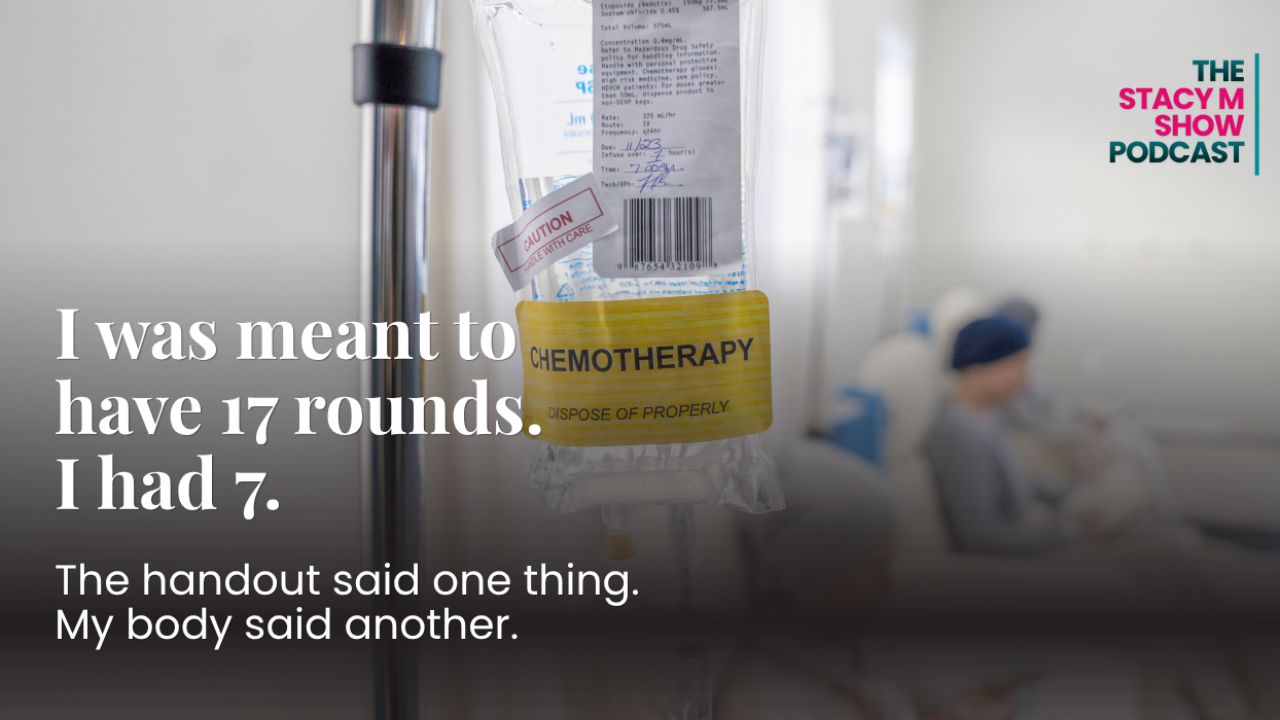
I was meant to have seventeen rounds of Keytruda. I had seven.
Last week I officially told my team I was done. No more immunotherapy. And the strangest part? I wasn't more scared of the cancer coming back than I was of the next side effect.
That's a big thing to say out loud. So let's talk about it.
Why I recorded this episode
When I was in the thick of treatment, I went looking for someone, anyone, who was being open about what immunotherapy is actually like. What went well. What didn't. What they'd do differently.
There wasn't much. And with the type of cancer I had, there was even less, because Keytruda has only been used for it for a few years.
I'm not pro-Western, pro-integrative, pro-anything or anti-anything. This is simply what I went through, and the thought process I've had since, now that I've had time to breathe.
The handout versus real life
Every treatment comes with a sheet of paper listing what could go wrong. Mine had a warning that immunotherapy can cause serious immune reactions against your own body, and that these can happen during treatment or after.
Here's what actually hit me:
- Colitis. This was the worst. I was basically housebound, with sharp pain down my left side for days. It meant three months on steroids, and I was wired but tired the entire time.
- Thyroid. My thyroid was completely healthy until the immunotherapy started attacking it. I'm now on thyroxine and swinging between underactive and overactive.
- Pins and needles, and that weird cobweb-on-my-arm sensation that turned out to be nerves.
- High blood pressure, which I stubbornly refused to medicate until treatment ended.
- Fatigue. Still here. A "busy day" for me might look like nothing to most people, but I'm in my pyjamas after school pick-up.
And here's what I was very lucky to skip: no vomiting (I'm weirdly proud of that), no lung problems, no eye issues, no lasting liver damage.
Everyone's list looks different. That's exactly why sharing real experiences matters.
The research gap nobody warns you about
The studies are built around people who finish the full course, on schedule, every three or six weeks. I had gaps of twelve weeks between some of mine.
There's very little out there about what happens if you have seven out of seventeen. Or any number in between.
I also can't help wondering how many of the people in those studies made it to the end despite the side effects, rather than because of how they felt along the way.
That's not me telling you what to do. It's me telling you to ask your team the hard questions, including the ones that don't have neat answers yet.
The conversation to have about supplements
If you're taking anything herbal or alternative, tell your oncologist. All of it.
I couldn't take curcumin while on immunotherapy because it would have clashed. The last thing you want is to make yourself unwell because you weren't upfront with your team.
I'm lucky that my oncologist and my herbalist talked to each other. There may have been some firm discussions. But it worked, and it's worth pushing for.
Choosing quality over quantity
I know someone who ended up with hepatitis and diabetes from their side effects. I wasn't prepared to sacrifice another healthy organ.
So I made the call. And then came the guilt.
Yes, guilt. Which sounds silly, but it was real. Right alongside it was relief, because I no longer had to brace for whatever side effect was coming next.
I still have PET scans. I still have my bloods done. I don't regret a single thing I did. I thank Western medicine for the chemo, the immunotherapy and the radiation. But I simply didn't have another ten rounds in me.
Now I'm looking at what can complement what I've already been through, like hyperbaric therapy and red light. Not because it's a fad, but because I want to test what might support me as a survivor.
A few things to take with you
If you're about to start treatment:
- Ask what side effects to watch for, and who to call the moment something feels off
- Get your bloods and check-ins done on schedule
- Be kind to yourself about food. Dry, carby, safe foods got me through, and I gave myself full permission
If you're already in it:
- Speak up early. I think my colitis could have been caught sooner
- Keep a running note of every symptom, even the strange ones
If you're thinking of stopping or changing course:
- Talk it through with your care team first
- Give yourself space to feel both guilt and relief. They can live side by side
This is my personal experience, not medical advice. Please speak with your own care team about your situation.
Over to you
Have you been through immunotherapy, or supported someone who has? What do you wish someone had told you?
Leave a comment or send me a message. I'm an open book, and I'd love to hear from you.
Ready to listen?
If any of this sounds like where you are right now, Episode 106: The Reality of Immunotherapy (Keytruda) is for you. It's the full, unfiltered version.
And if you know someone who's about to start Keytruda or is quietly wondering whether to keep going, please share this post with them. They might be searching for exactly this.
Don’t miss out on powerful conversations every week! Join us for fresh episodes that dive deep into relationships, personal growth, and resilience. Hit subscribe and tune in to The StacyM Show—your journey to a stronger, more empowered life starts here!